Showing posts with label Autos. Show all posts

Wednesday, 21 December 2016

Uber halts California self-driving cars test

DBliss Media Autos
Uber had started to pick up passengers in specially-modified Volvo self-driving cars (Volvo)

Ride-sharing firm Uber has suspended its test of self-driving cars in San Francisco after regulators revoked the registration of the vehicles.

Passengers had recently been given the option of a booking a self-driving vehicle..

But authorities had threatened legal action if Uber did not obtain a special permit to test the cars.

Uber argues that because they came with a safety driver and are not fully autonomous, the permit was not needed.

"We're now looking at where we can redeploy these cars, but remain 100% committed to California and will be redoubling our efforts to develop workable statewide rules," Uber said.

San Francisco is Uber's second trial city for the new technology. In Pittsburgh, the company has been running its driverless trial since September and has not required special permits.

Not yet fully autonomous

Although the cars are promoted as "self-driving", they must constantly be monitored by an actual driver who can take control any time the software should fail.

Uber says its technology is not sophisticated enough to have cars continuously drive by themselves - and therefore the permit demanded in San Francisco is not needed.

According to the regulators though, 20 other companies testing self-driving technology in California - including Google, Tesla and Ford - do so with the special permit which requires the firms to report any accidents to the authorities. This potentially undermines the company's reputation, as the reports are available to the public.

Just before the city's Department of Motor Vehicles threatened Uber with legal action over the missing permit, a video of an Uber self-driving vehicle running a red light in San Francisco had been uploaded to YouTube.

The trials are designed for the firm to identify flaws and glitches in the technology behind the autonomous driving.

Wednesday, 14 December 2016

U.S. proposes requiring vehicles to 'talk' to each other to avoid crashes

Automobile traffic backs-up as it travels north from San Diego to Los Angeles along Interstate Highway 5 in California in this December 10, 2013 file photo. (REUTERS)
The U.S. Transportation Department on Tuesday proposed requiring all new cars and trucks to be able to "talk" to one another using short-range wireless technology to potentially avoid tens of thousands of crashes annually.

Regulators, which first announced plans to pursue requiring the technology in early 2014, are proposing to give automakers at least four years to comply from the time it is finalized and would require automakers to ensure all vehicles "speak the same language through a standard technology."

The administration of President-elect Donald Trump will decide whether to finalize the proposal, which does not apply to larger vehicles like buses and tractor trailers.

The U.S. National Highway Traffic Safety Administration (NHTSA) estimates that talking vehicles could eliminate or reduce the severity of up to 80 percent of crashes where alcohol is not a factor, especially crashes at intersections or while changing lanes.

Last year, there were 6.3 million U.S. vehicle crashes. In October, NHTSA said U.S. traffic deaths jumped 10.4 percent in the first six months of 2016. The jump follows a spike in 2015, when road deaths rose 7.2 percent to 35,092, the highest full-year increase since 1966.

Talking cars and trucks would use dedicated short range communications to transmit data up to 300 meters, such as location, direction and speed, to nearby vehicles. That data would be updated and broadcast up to 10 times per second to nearby vehicles, which can identify risks and provide warnings to drivers to avoid imminent crashes.

"From a safety perspective, this is a no brainer,” said U.S. Transportation Secretary Anthony Foxx.

NHTSA Administrator Mark Rosekind said vehicles would protect privacy by only exchanging safety information and would ensure hackers can't intercept signals.

The rule would not require vehicles currently on U.S. roads to be retrofitted with the technology. Foxx said owners couldn't turn off the technology but could turn off warnings.

The Alliance of Automobile Manufacturers, a trade group representing General Motors Co (GM.N), Toyota Motor Corp (7203.T), Volkswagen AG (VOWG_p.DE) and other major automakers, noted the system is already being tested. The group said it would study the proposal.Automakers are pushing to ensure that a portion of the spectrum reserved for connected vehicles is not used by other companies for other wireless device use. The U.S. Federal Communication Commission has begun testing potential sharing options.

Separately, the Federal Highway Administration plans to issue guidance for vehicle-to-infrastructure communications, which will help planners allow vehicles to “talk” to roadway infrastructure such as traffic lights.

Reuters

Tuesday, 13 December 2016

Meet Waymo, Google's self-driving car company

Journalists take a test drive in a prototype of Google's own self-driving vehicle during a media preview of Google's current autonomous vehicles in Mountain View, California September 29, 2015. (REUTERS)

Alphabet Inc's Google self-driving car project recast itself as Waymo on Tuesday, an independent entity within the technology giant, as executives suggested the company is close to bringing its autonomous driving to the public.

Although no deals were announced, the move signals a desire to finally monetize the company's valuable research amid fierce competition from a score of rivals all vying to be the first to launch production-ready self-driving cars.

Google's high-profile program, now in its seventh year, has been at the forefront of self-driving technology, but is now challenged by companies from Uber Technologies Inc [UBER.UL] to Apple Inc and traditional car companies in the fast-growing industry.

"It's an indication of the maturity of our technology," John Krafcik, Waymo's chief executive, told reporters at a press conference in San Francisco. "We can imagine our self-driving tech being used in all sorts of areas."

The move shows "confidence that we are close to bringing this (technology) to a lot of people," Krafcik said. "We've sort of reached an inflection point."

That came in October 2015, when one of the company's self-driving cars gave the first fully autonomous ride in Austin, Texas, to a blind man with no one else in the car. Normally during testing, an engineer sits in the passenger seat to monitor the technology.

Until now, the program has been part of secretive research unit Google X. Waymo stands for "A new way forward in mobility," according to Krafcik.

Waymo would reveal when the technology will be production-ready "soon", he said.

Krafcik reiterated that Waymo has no interest in producing self-driving cars, but rather in developing the technology to drive them. Possible applications would be in ride-sharing, transportation, trucking, logistics, and personal use vehicles, he said.

Fiat Chrysler, Google's first partner, teamed up with the tech company in May to work together to integrate Google's self-driving system into 100 of the carmaker's minivans.

Google's goal to perfect an autonomous vehicle that requires zero human intervention stands in contrast to that of some other automakers developing partial autonomy, which requires some driver supervision. Google's self-driving cars have driven over 2 million miles and testing now focuses on the trickiest scenarios faced by cars on surface streets.

Google has expanded its program over the past year, hiring more engineers while doubling its testing centers from two U.S. cities to four.

Although there have been some significant departures over the past year - Chief Technical Officer Chris Urmson left in August after leading the project from its inception - some new hires have pointed to the program's readiness to move past its experimental stage.

In July, the project appointed its first general counsel and a month later it hired former Airbnb executive Shaun Stewart as director of the project, with a mandate to commercialize the company's self-driving technology.

Reuters Contributed to the Reports

Wednesday, 30 November 2016

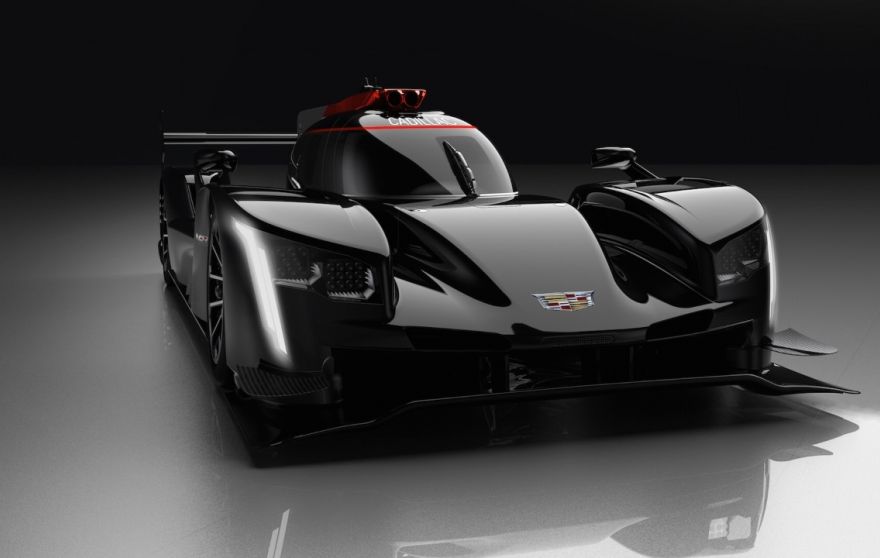
Sleek Cadillac race car to hit the high banks of Daytona

Cadillac

Cadillac’s latest model is no luxury car.

The DPi-V.R unveiled today is its entry in the IMSA WeatherTech SportsCar Championship’s new Daytona Prototype international class for the 2017 season. The move marks Cadillac's first foray into top flight prototype endurance racing since 2002.

The quick Caddy replaces the Chevrolet Corvette Daytona Prototype that won the series this year. Rules changes facilitated the move to a redesigned machine.


The Dpi-V.R is based on a spec Dallara chassis and powered by an Earnhardt Childress Racing Engines naturally aspirated 6.2-liter V8 regulated to around 600 hp, according to Road & Track. The bespoke engine shares its displacement, but little else, with the automaker’s production V8s. A rearview camera mirror is one piece of tech borrowed from the showroom cars.

The reigning three-peat champion Action Express Racing team and Wayne Taylor Racing will both be fielding the cars in full season efforts that kick off at the 24 Hours of Daytona in January.


The program is meant to promote Cadillac’s V-Series current lineup of high performance sedans and coupes, but with its long-running Pirelli World Challenge race cars already resembling one of those, could a super-Caddy be in the works?

General Motors has been recently spotted testing what appears to be a mid-engine supercar that’s purported to be a new Corvette, but Cadillac president Johan De Nysschen told Fox News at the 2015 Detroit Auto Show that “I think there is room for a halo performance car such as that in our lineup,” and that one “will come.”

Wednesday, 5 October 2016

2018 BMW 8-series Spied: A Big, Bold Luxury Two-Door


What It Is: BMW’s upcoming 7-series-based 8-series coupe, covered in camouflage and penned in among other BMW prototypes. Expected to be larger than today’s two-door 6-series (the 6 can also be had in four-door Gran Coupe form), the 8-series will serve as BMW’s flagship coupe, just as its eponymous forebear did before it was discontinued in 1999.


An interesting history note: When the original 8-series debuted in 1990, the smaller, less expensive 6-series went out of production—only to return a few years after the 8-series, which only survived for a single generation, faded from BMW showrooms. History will not repeat itself this time, however, as we anticipate BMW will add the 8-series to the lineup, keeping the smaller 6-series around to do battle with Mercedes-Benz’s upcoming E-class coupe.

Why It Matters: Mercedes-Benz is moving back into the mega-upscale, mega-expensive two-door space with its gorgeous S-class–based coupe and cabriolet, and BMW must think there’s room for two Germans at that table. We think that a successor to the original 8-series, if it is somewhat sporty in the BMW vein, would make for an interesting alternative to the cushy, unabashedly comfort-oriented full-size Mercedes two-door, not to mention Bentley’s Continental or the next-generation Maserati GranTurismo. See Full Article Here

Ex-Tesla rival Fisker rejoins electric auto race

The 2012 Fisker Karma was a short-lived venture (AFP)
Tesla's previous opponent in spearheading electric autos, Henrik Fisker, has re-entered the electric auto market declaring two new models. 

Mr Fisker's past organization, Fisker Car, established in 2007, fabricated extravagance autos famous with celebrities until its high profile 2013 bankruptcy.

For his new pursuit, Mr Fisker has has announced both a high-end car as well as an affordable mass-market model.

Carmakers worldwide are progressively concentrating on the electric business sector. 

Reviving his rivalry with Tesla, Mr Fisker guaranteed "a significantly longer battery life and range than any battery currently on the market".

"Both the technology and the market are more mature now than when we first started out as pioneers in the electric vehicle industry, and our new vehicle will be the most innovative and cutting-edge electric car ever created," he said.

Before beginning his first electric auto organization in California, the Danish designer worked for auto firms including Aston Martin and BMW. 

The Fisker Karma model, released in 2012 for $100,000, attracted a lot of celebrity interest with buyers such as Leonardo DiCaprio, Ashton Kutcher and Justin Bieber. 

Hollywood celebrities were among the fans of Mr Fisker's first models  (AFP)
But after selling around 2, 000 vehicles, Mr Fisker left the company and it filed for bankruptcy protection in 2013 owing US taxpayers $139m (£109m).

It later saw its assets sold to Chinese company Wanxiang.

Despite also having failed to ever make a profit, Tesla is preparing the launch of a new mass market model set to be priced lower than its flagship Model S and Model X cars.

Traditional carmakers like General Motors, Renault Nissan or Volkswagen are also moving into all-electric vehicles.

Thursday, 18 August 2016

Uber to deploy self-driving cars in Pittsburgh

Uber plans to pick up passengers in specially modified Volvo self-driving cars (Image: Volvo)
The ride-sharing firm Uber will, for the first time, allow users to hail self-driving cars within a fortnight, the company has confirmed.

Uber said the launch would take place in Pittsburgh, Pennsylvania. It added that it was teaming up with Volvo.

At first, the vehicles will be supervised by a driver, who can take control if necessary, and an observer, Bloomberg reported.

The firm first revealed plans to replace human drivers two years ago.

More than one million people drive vehicles linked to its app, but are not directly employed by the company.

A spokeswoman for the firm told the BBC: "Starting later this month, Uber will allow customers in downtown Pittsburgh to summon self-driving cars from their phones, crossing an important milestone that no automotive or technology company has yet achieved.

"In Pittsburgh, customers will request cars the normal way, via Uber's app, and will be paired with a driverless car at random. Trips will be free for the time being, rather than the standard local rate of $1.30 [£0.98] per mile."

She added that Volvo had already sent a small number of sensor-equipped XC90 sports utility vehicles (SUVs) to Uber, which would be used in the initial trials. The carmaker intends to have delivered 100 such cars to its partner by the end of the year.

Uber
Uber began using Ford Fusion cars to test its self-driving technologies in Pittsburgh earlier this year (Image: UBER)
Uber had previously used modified Ford Fusions to test its self-driving tech.

Volvo collaboration

Volvo has confirmed it is taking part in a "joint project" between Uber and the carmaker.

"Both Uber and Volvo will use the same base vehicle for the next stage of their own autonomous car strategies," the firm said.

"This will involve Uber adding its own self-developed autonomous driving systems to the Volvo base vehicle."
Volvo XC90
Add caption

Volvo
Volvo and Uber have pledged $300m to their self-driving project (Image: Volvo)
Engineers from both companies would collaborate on the project, the firm added.

"This alliance places Volvo at the heart of the current technological revolution in the automotive industry," said Hakan Samuelsson, president and chief executive of Volvo.

The Bloomberg story notes that the Volvo deal will not be an exclusive one and that Uber plans to work with other carmakers.

Volvo XC90
Volvo's XC90 self-driving vehicles have been modified for self-driving in other projects already (AFP)
Some of Uber's know-how in the field of self-driving vehicles has come via its agreement to purchase Otto, a start-up founded by former Google employees to develop driverless trucks.

Otto was co-founded by Anthony Levandowski, whose previous start-up, 510 Systems, was bought by Google when it began its own self-driving vehicles project.
'Good step'

Volvo has already been testing self-driving versions of the same vehicle in Sweden as part of its "Drive Me" project, said Alan Stevens at the UK's Transport Research Laboratory (TRL) and the Institution of Engineering and Technology (IET).

The firm has also trialled the vehicle in Australia and plans to do so in London next year.

Tuesday, 16 August 2016

Ford's self-driving car 'coming in 2021'

Eventually, Ford's mass-produced self-driving car will not have a steering wheel
Ford has said it will mass-produce a fully autonomous self-driving car without a steering wheel by 2021.

The bold ambition was outlined by the company’s president, Mark Fields, at an event in Palo Alto, California.

Ford said it would double its investment in its research centre in the city, as well as making sizable investments in technology companies in the autonomy industry.

The firm said the car would be in use by customers by 2021.

It said this was most likely as part of an Uber-like ride-sharing service - but one that doesn’t require a human driver.

“As you can imagine, the experience inside a vehicle where you don’t have to take control changes everything,” said Mr Fields, in an interview with the BBC.

“Whether you want to do work, whether you want entertainment… those are the types of things we are thinking about as we design the experience for this type of autonomous vehicle."

The announcement, described as “transformational” by Mr Fields, signalled an era when Ford sees itself, particularly in cities, as a company that provides an ad-hoc service rather than focusing solely on selling the cars to the general public.

“There will be a growing per cent of the industry that will be fully autonomous vehicles,” Mr Fields said.

Ford has invested in Velodyne, a company that works on LiDAR technology
"Our goal is not only to be an auto company, but an auto and mobility company.”

Level up

In recent years Ford has described itself as a technology company rather than simply a car maker, and on Tuesday it genuinely started to sound like one.

In partnership with Chinese firm Baidu, Ford has made a joint investment of $150m (£115m) in Velodyne - a company that works on light detection and ranging (LiDAR) technology. LiDAR is the system used for accurately detecting objects around the car.

Ford was also part of an investment round that raised $6.6m for Civil Maps - a digital mapping company - as well as money put towards neuroscience research.

Tellingly, there was no mention of Google or Apple in Ford’s announcement - a suggestion it has opted to compete against the Silicon Valley giants rather than try and work with them as some had originally anticipated.

But Google still leads the way in self-driving technology - its cars have been out on public roads clocking up miles for several years now. It too is developing a car without a steering wheel - but regulations so far prevent that car from venturing beyond private land.

Like Google, Ford said it would be focusing on “Level 4” autonomy in reference to the standards put in place by the US-based Society of Automotive Engineers (SAE).

The levels represent the sophistication of self-driving technology. At Level four - “high automation” - the car is able to operate, unmonitored, in a particular use case. For Ford, the use case would be a city area. Level 5 would mean full autonomy in any driving condition.

The company said it was not interested in offering Level two or three driving. Level two means some level of automation that requires the driver to monitor the car at all times.

Isolated Tesla

Tesla’s Autopilot, which changes lanes and monitors traffic flow, is officially Level two - although critics say human nature means drivers are instinctively treating Autopilot as if it were in fact Level three automation. Level three is when constant monitoring is not required, but drivers should be ready to take control in emergencies. Tesla’s technology is under investigation by US road safety regulators after it was blamed for causing the death of a driver earlier this year.

Tesla chief executive Elon Musk defended the roll-out of Autopilot in a recent blog post:

"When used correctly, it is already significantly safer than a person driving by themselves and it would therefore be morally reprehensible to delay release simply for fear of bad press or some mercantile calculation of legal liability," he wrote.

At its announcement, Ford chief technical officer Raj Nair said the company wasn’t satisfied that drivers could safely take control from a level two or three vehicle at a moment’s notice.

“We don’t yet know how to manage hand over back to the driver and have him engage and have him situationally aware, and be able to do that in a safe aware manner,” he said.

This approach chimes with the views of Google which in the past has expressed concern about the safety implications of semi-autonomous driving. It leaves Tesla, with Autopliot, isolated among auto makers.

"Tesla is unique in that it’s allowing its users to be beta testers,” said Wayne Cunningham, managing editor of motoring news website Road Show.

"No other company thinks that way."

On Ford’s 2021 pledge, Mr Cunningham told the BBC it was a feasible goal but one that was intentionally narrow.

"It’s not as an aggressive step as it sounds,” he said.

"This is really a car designed for very specific urban environments. It’s a car that’s going to take people at 20-30 mph through city centres."

Tuesday, 9 August 2016

Autos: A City Bus With The Soul Of An S-Class


BUSES MAKE 32 BILLION JOURNEYS every year in Europe alone. That figure is bound to go up as global populations rise and more people move to urban centres. That’s why Mercedes-Benz — a luxury carmaker you’re unlikely to link with public transport — has debuted a flashy, futuristic new bus that drives itself, plans its own routes, saves fuel, and charges your phones.

The company's Future Bus is a twelve-metre long, semi-autonomous, glowing chariot that was announced earlier this week. It uses Daimler’s CityPilot technology, smart vehicle AI that’s similar to the tech it used for its Actros self-driving truck concept two years ago. The goal is to create as smooth, predictable, and energy-efficient of a ride as possible: Three qualities notoriously absent from buses' bad stereotypes.


Sharp bus design has long lagged behind subways and trains. But Mercedes-Benz wants to inject modernity and elegance to one of Earth’s most common, utilitarian modes of public transportation. Future Bus — while not incredibly spacious-looking — is outfitted with tons of cameras and long-range radar that extends 200 metres to visualise road hazards in 3D, and self-drive the bus down the road.


Future Bus’s maiden voyage shuttles flyers from the Schiphol airport in Amsterdam to the town of Haarlem, nearly 20km away. It’ll still be a while before we see a bus like this roaming up and down human-packed city avenues the world over — self-driving private cars are barely in the wild as it is. But this week’s announcement signals a promising prospect: A nicer bus could be right around the corner, driving its own way around it.


Tuesday, 19 July 2016

Music artiste Joe praize Acquires Mercedes-Benz 4matic SUV

 Mercedes-Benz 4matic SUV
Joe praize's new Mercedes-Benz 4matic SUV

Gospel music minister Joe praize has acquired a new 2011 Mercedes Benz M-Class ML350 4matic SUV.

Joe praize
Few months back, Joe praize gave his former car, another SUV as a seed and just few months down the line, the Gospel music minister is reaping the harvest bountifully. We are certain the car is just one of the many ways the minister is harvesting.


Check more photos of Mercedes-Benz 4matic SUV below:


2018 Lamborghini Huracan Superleggera Spy Shot and Video


A lightweight version of Lamborghini’s Huracán supercar—hence the name, superleggera (meaning “super light”). This prototype’s aggressive front splitter and large, fixed rear wing promise an aggressive, track-focused aerodynamic package. It also should boast upgraded wheels and tires and brake components to complement a stiffer suspension tune. What it won’t have is the standard Huracán LP610-4’s all-wheel-drive system, as the simpler and slightly lighter rear-drive LP580-2, introduced last year, will surely be the basis for the new Huracán Superleggera.

Watch The Video Below


Stripping the Huracán LP610-4’s all-wheel-drive hardware to create the rear-wheel-drive LP580-2 only lightened the Huracán by a claimed 73 pounds. To pare it down to fighting weight, a more extreme diet is required. The Huracán Superleggera likely will use plenty of carbon fiber—possibly of Lamborghini’s own forged variety—and a significantly stripped-out interior without the luxurious appointments used in the standard Huracán.

The Superleggera will use the same mid-engine chassis as the standard rear-drive Huracán LP580-2, but with reduced mass thanks to the carbon fiber in the body and a shorter equipment list. With its focus on high performance over cruising in style, the Superleggera isn’t expected to spawn a Spyder variant. A short list of both standard and optional equipment will also trim weight to a minimum.


Powertrain: The 5.2-liter V-10 was detuned to 573 horsepower for its application in the rear-drive LP580-2, but expect Lamborghini to go in the opposite direction with the Superleggera model. More muscle than the standard, all-wheel-drive Huracán’s 602 horsepower should be on the menu, with the standard seven-speed dual-clutch automatic remaining the only transmission choice. (We haven’t seen a stick-shift Lambo for years now.)

Estimated Arrival and Price: Watch for the Superleggera to arrive sometime in 2017—with an MSRP reflecting a significant premium over the standard Huracán LP610-4’s starting price of $242,445. We suspect $300,000 isn’t out of the question, which would fill some of the wide-open price territory between the Huracán and the $400,000-plus Aventador.

Source: Car and Driver

More Photos Below: Courtesy: MotoAuthority


Saturday, 16 July 2016

Ronaldo buys Bugatti for 2.5million euros

Ronaldo
Ronaldo in his new Bugatti

Cristiano Ronaldo has continued his celebrations after Portugal’s Euro 2016 triumph in style by spending 2.5 million euros on a new Bugatti.

The 31-year-old showed off his new purchase on social media and, despite not being able to enjoy it just yet, Ronaldo shared his happiness for having receive his new toy. “The animal has come,” he said. Very few units of the Bugatti in question have been produced and were only available upon request, so it’s likely Ronaldo had been waiting weeks to receive the car. 

Ronaldo buys Bugatti

The cost of the vehicle goes far beyond the sale price. Some specialised websites did the breakdown of what the final cost to the Real Madrid star will be: 
  • Car Price (without tax): 1,600,000 million VAT (35.75%), 700,000 euros 
  • Vehicle Registration Tax in Madrid: 230,000 euros 
  • Set of tires: 27,000 euros Tire change **: 60,000 euros Changing tires ***: 108,000 euros 
  • Annual review: 27,000 euros 
  • Oil Change: 18,000 euros *The normal VAT tax amount added for a luxury car with higher CO2 emissions ** Tires can only be removed from the rims in France *** Three sets of tires are recommended
Check out more pictures on Ronaldo's Bugatti below

Ronaldo buys Bugatti


DBliss Media Autos

DBliss Media Autos

DBliss Media Autos

Privacy Policy | Terms and Condition | Disclaimer | Contact Us

Copyrights © 2017 My Kranchar - Designed by DBliss Media Software Dept. In Collaboration With